Beelink Mini-PCs: DDR5, 10GbE & AI Power in Tiny Form
James Moore ·
Listen to this article~5 min
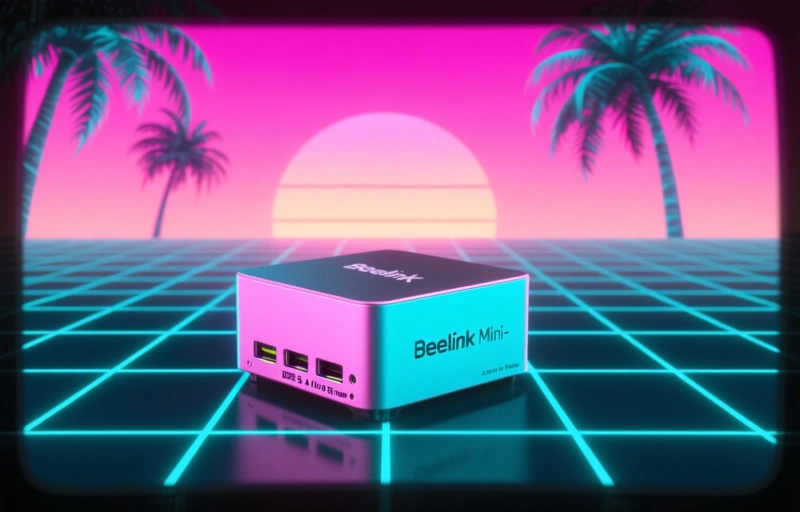
Beelink's new mini-PCs pack DDR5 memory, 10GbE networking, and AI acceleration into compact form factors, challenging traditional desktop performance expectations for professionals.
If you're in the market for serious computing power that doesn't take up your entire desk, you're going to want to hear about what Beelink is doing. Their latest mini-PC lineup is packing some genuinely impressive specs that feel like they're pulled from a much larger machine. We're talking about the kind of hardware that makes you wonder how they fit it all in there.
It's not just about being small anymore. The conversation has shifted to what these compact systems can actually do. And honestly, the answer is becoming "pretty much everything." From creative work to data processing, these aren't just media streamers or basic office machines anymore.
### What's Actually Inside These Tiny Boxes?
Let's break down what makes these new mini-PCs stand out. First up is DDR5 memory. If you haven't kept up with memory tech, DDR5 is the latest standard, and it brings some serious improvements over DDR4. We're talking about higher bandwidth, better power efficiency, and improved performance for memory-intensive tasks. It's the kind of upgrade that makes everything feel snappier.
Then there's the 10 GbE networking. That's ten gigabit Ethernet for those keeping score. Most home and office networks are still running at 1 gigabit, so this is a massive jump. For professionals working with large files, network backups, or virtual machines, this kind of connection speed can literally save hours of waiting.
### Where AI Acceleration Comes Into Play
This is where things get really interesting. AI acceleration isn't just a buzzword here—it's becoming a practical feature for more and more applications. Think about video editing software that can automatically enhance footage, development tools that help with code completion, or even local AI models that don't need to phone home to a cloud service.
Having dedicated hardware for these tasks means they happen faster and more efficiently. It's one of those features you might not think you need until you try it, and then you wonder how you worked without it.
### Who Actually Needs This Much Power in a Mini-PC?
That's the right question to ask. Not everyone needs this level of performance in such a small package. But for certain professionals, it's becoming essential. Here's who might benefit most:
- Developers working with containers and virtual machines
- Video editors who need powerful rendering in a portable form
- Data scientists running local models and simulations
- Network engineers testing high-speed configurations
- Creative professionals with limited desk space but demanding software
It's about matching the tool to the job. Sometimes you need a full tower workstation. Other times, a mini-PC with these specs can handle 90% of your workload while taking up 10% of the space.
### The Bigger Picture for Mini-PCs
What's really fascinating is watching this category evolve. Mini-PCs used to be about compromise—you accepted less power for the smaller size. Now we're seeing systems that don't feel like compromises at all. They're becoming legitimate primary machines for demanding users.
As one industry observer recently noted, "The gap between what's possible in a mini-PC and a traditional desktop is closing faster than most people realize." That's not just marketing talk—it's what we're actually seeing in the specs and real-world performance.
The thermal management alone is worth appreciating. Getting this much performance into such a small chassis requires some clever engineering to keep everything cool and quiet. It's not just about throwing powerful components together—it's about making them work together efficiently in a constrained space.
### Making the Right Choice for Your Needs
Before jumping on the latest and greatest, take a moment to consider what you actually need. That 10 GbE port is fantastic, but do you have a network that can support it? The AI acceleration is impressive, but does your workflow include applications that can take advantage of it?
Sometimes the mid-range option makes more sense than the top-of-the-line model. The key is understanding your own requirements rather than just chasing specs. These new Beelink systems represent what's possible at the high end of mini-PCs right now, but your perfect machine might be one step down from the flagship.
What's clear is that the mini-PC market isn't standing still. With each generation, we're seeing more performance, better connectivity, and smarter features packed into these compact systems. Whether you're a professional looking for a space-saving workstation or just someone who appreciates powerful tech in small packages, there's never been a better time to pay attention to what's happening in this corner of the computing world.