Compact AI Mini PCs That Are Changing the Game
Sofía García ·
Listen to this article~5 min
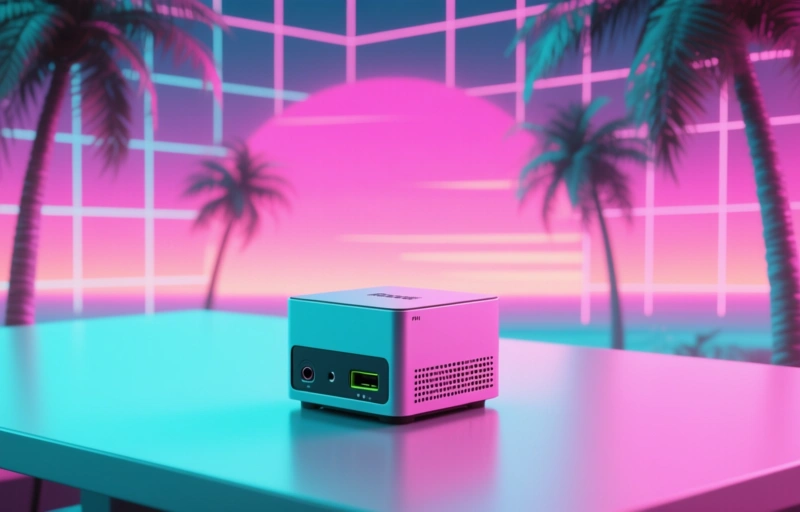
Compact AI-powered mini PCs are redefining what small computers can do. From remote work to creative projects, these tiny machines offer big performance, energy savings, and a clutter-free desk.
If you've been keeping an eye on the tech world, you've probably noticed a shift. Big, clunky towers are slowly making way for something much smaller—and smarter. We're talking about compact AI-powered mini PCs. These little machines pack a serious punch, and they're not just for niche enthusiasts anymore. They're becoming a go-to choice for professionals, creators, and even casual users who want power without the footprint.
### What Makes These Mini PCs Special?
At first glance, a mini PC might look like a toy. But don't let the size fool you. These devices are built to handle heavy workloads, from video editing to data analysis, all while sitting quietly on your desk. The real magic comes from the AI integration. Modern mini PCs come with dedicated AI processors or optimized software that learns your habits and speeds up tasks. Think faster rendering, smarter file organization, and even real-time language translation.
Another big win is energy efficiency. Traditional desktops can guzzle power, especially when running complex applications. Mini PCs, on the other hand, are designed to do more with less. You might save anywhere from $50 to $150 a year on electricity, depending on your usage. That's not pocket change.
### Who Should Consider One?
Honestly, almost anyone. But let's break it down:
- **Remote workers**: If you need a reliable machine for video calls, document editing, and multitasking, a mini PC is a solid choice. It won't take up half your desk, and it's quiet enough for a home office.
- **Creative professionals**: Graphic designers, video editors, and 3D modelers can benefit from the AI acceleration. Some models even support dual 4K monitors, giving you a massive workspace in a tiny package.
- **Gamers**: Now, I'm not saying a mini PC will replace a high-end gaming rig. But for casual gaming or streaming, some of these devices handle it surprisingly well. Plus, they're easy to pack up for LAN parties.
- **Tech enthusiasts**: If you love tinkering, mini PCs are a dream. Many are modular, so you can upgrade RAM, storage, or even the processor down the line.
### What to Look for When Buying
Not all mini PCs are created equal. Here are a few things to keep in mind:
- **Processor**: Look for at least an Intel Core i5 or AMD Ryzen 5. If you can get a model with a dedicated NPU (neural processing unit), even better for AI tasks.
- **RAM**: 16GB is the sweet spot for most users. Go for 32GB if you're doing heavy multitasking or running virtual machines.
- **Storage**: SSDs are a must. Aim for at least 512GB, but 1TB is ideal if you store a lot of files locally.
- **Ports**: Make sure it has enough USB ports, HDMI or DisplayPort for your monitors, and maybe a Thunderbolt 4 if you want future-proof connectivity.
- **Cooling**: Mini PCs can get hot. Look for models with good thermal design—like a fan or passive cooling system—to keep performance steady.
> "The best technology disappears into the background, letting you focus on what matters." That's the philosophy behind these compact machines. They're not trying to be flashy; they just work.
### Real-World Performance
Let's talk numbers. A typical mini PC with an Intel Core i7 and 16GB of RAM can handle most office tasks without breaking a sweat. In benchmarks, it scores close to a mid-range laptop, but with better sustained performance because it doesn't throttle as much. For creative work, it can export a 10-minute 4K video in about 12 minutes—comparable to a desktop that's twice its size.
And here's a fun fact: Some of these mini PCs are so small they can be mounted behind a monitor or under a desk. That means zero clutter. If you're a fan of minimalism, you'll love it.
### The Price Point
You might expect to pay a premium for all this tech, but mini PCs are surprisingly affordable. Entry-level models start around $300, while high-end ones with AI capabilities can go up to $1,200. Compare that to a traditional desktop with similar specs, and you're often saving $200 to $400. Plus, you're getting a smaller footprint and lower energy costs.
### Final Thoughts
Compact AI-powered mini PCs are more than a trend—they're a practical solution for anyone who values space, efficiency, and performance. Whether you're building a home office, upgrading your gaming setup, or just curious about the latest tech, these little machines deserve a look. They're proof that good things really do come in small packages.