Dell's New Mini-PC with 1 GbE Fiber: A Compact Powerhouse
Sofía García ·
Listen to this article~4 min
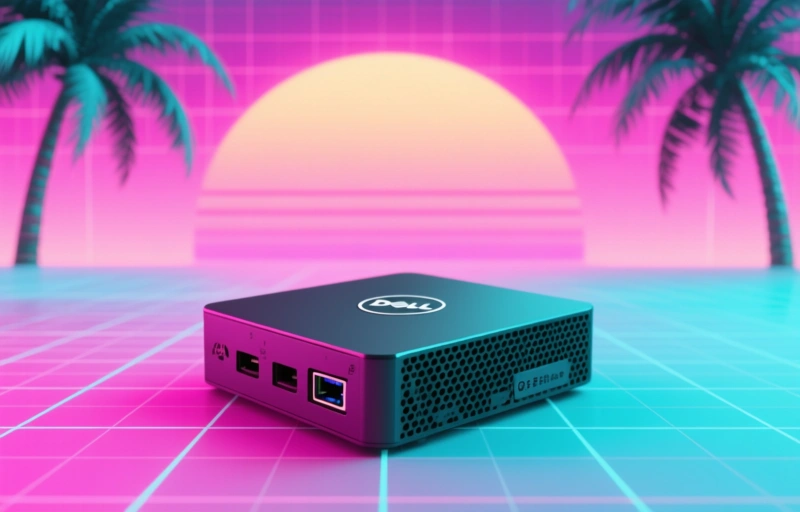
Dell launches a new global mini-PC featuring integrated 1 GbE optical fiber connectivity, bringing enterprise-grade networking to ultra-compact form factors for professional and business use.
So, Dell just dropped a new mini-PC on the global market, and it's got a feature that's turning heads: 1 GbE optical fiber connectivity. That's right, they've managed to pack enterprise-grade networking into a form factor that can literally fit in the palm of your hand. For IT pros and business users in the States, this isn't just another tiny computer—it's a potential game-changer for space-constrained setups that still demand serious bandwidth.
Think about it. You're dealing with a crowded server rack, a tight office nook, or maybe a digital signage setup where every inch counts. The traditional trade-off has been size versus performance, especially on the network side. You'd often sacrifice speed for that small footprint. Dell seems to be saying you don't have to choose anymore.
### What Makes This Mini-PC Different?
The headline feature is, without a doubt, that integrated 1 Gigabit Ethernet over optical fiber. For most of us, that's tech talk. Let's break it down simply. Regular Ethernet uses copper cables. Fiber optic cables use light. The result? Fiber is faster over longer distances and is immune to electrical interference. It's the backbone of modern data centers and high-speed internet.
Putting this into a mini-PC means you can now place a powerful node anywhere—think a factory floor, a retail back office, or a remote kiosk—and get a rock-solid, high-speed connection back to your main network. No more worrying about signal degradation over long copper runs. It just works.
### Who's This Really For?
This isn't really a machine for your average home user browsing the web. It's built for professionals who need reliable, compact computing with top-tier connectivity. Let's picture a few scenarios:
- **Edge Computing:** Processing data right where it's collected, like in a smart warehouse or on a manufacturing line.
- **Digital Signage & Kiosks:** Running multiple high-definition video streams in a mall or airport without a bulky tower.
- **Thin Client/VDI Hosts:** Serving as a centralized point for virtual desktops in a small office branch.
- **Network Appliances:** Acting as a compact firewall, router, or network monitoring station.
The beauty is its versatility. Because it's so small—we're talking a box likely measuring just a few inches in each dimension and weighing only a couple of pounds—the deployment options are nearly endless.
### The Bigger Picture for Compact Computing
Dell's move here signals a shift. Mini-PCs are shedding their 'underpowered' reputation. They're becoming legitimate tools for business infrastructure. It reminds me of a quote I once heard from a network architect: 'The best technology is the kind you don't have to think about. It's just there, working.' That's the promise here: enterprise power without the enterprise-sized box.
We're seeing a convergence. Processing power has become incredibly efficient, and now critical connectivity options are following suit. You get the performance of a machine many times its size, with the added benefit of lower power consumption and less heat output. In an era where efficiency is king, both in energy use and physical space, this makes a ton of sense.
Of course, the real-world performance, exact pricing in USD, and full specs are what will determine its success. But on paper, Dell is addressing a very specific and growing need in the professional market. It's a compelling option for anyone looking to simplify their IT footprint without compromising on network capability. Sometimes, the biggest solutions really do come in the smallest packages.