From Prime Computer to Mini PCs: A Legacy of Power in a…
Sofía García ·
Listen to this article~5 min
The story of Prime Computer connects directly to today's mini PC revolution. Discover how super-mini computers evolved into compact, powerful machines that fit in your palm.
You're probably wondering what a company from computing's past has to do with the tiny, powerful machines we see today. Honestly? More than you'd think. The story of Prime Computer – and the mini computer market it helped define – is a direct ancestor to our current obsession with compact, efficient power. It's a shift from room-sized mainframes to desktops, and now to devices that fit in your palm, all driven by the same fundamental desire: to get more capability into less space. Let's connect those dots.
### The Prime Computer Legacy: What Happened?
Look, I get it. For anyone who wasn't in a data center in the 70s or 80s, the name Prime Computer might just be a trivia answer. But for a generation of engineers and programmers, they were giants – literally and figuratively. Prime built what were called 'super-mini' computers. These weren't the desktops we know; they were refrigerator-sized units that served multiple users in scientific, engineering, and academic settings. They were powerful, specialized, and expensive. Wild, right? So, what happened to Prime Computer? The landscape shifted – fast. The rise of the microprocessor and the commoditization of computing power meant that workstations and, eventually, powerful personal computers could do what once required a dedicated mini. Fair enough. Prime struggled to adapt, went through mergers and acquisitions, and its brand faded into tech history. (Side note: if you search for 'Prime Computer Alumni' today, you'll find passionate groups keeping that legacy alive – a testament to the impact they had.)
The core idea, though? That didn't die. The drive to condense capability survived. Point taken. It just moved from the corporate lab to your desk... and then to your pocket.
### The Modern Mini PC: Power in a Tiny Package
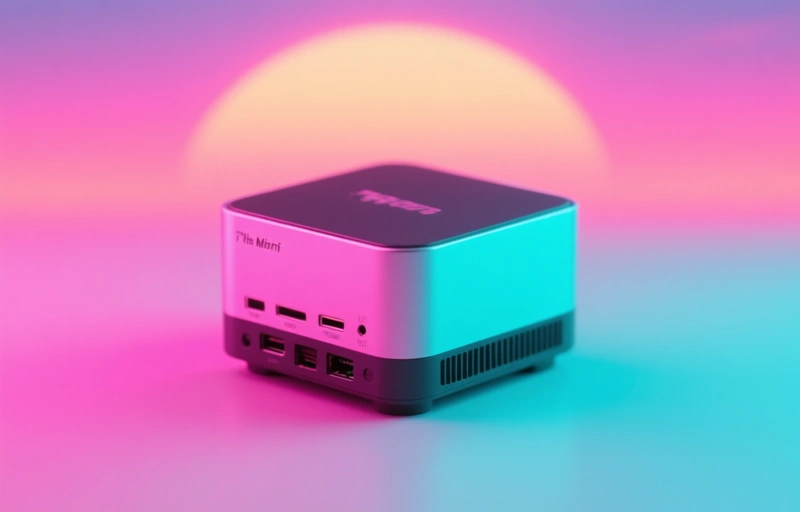
Speaking of which, let's talk about the mini PC. You've seen them – those little plastic or metal boxes, often not much bigger than a paperback book. They're everywhere now, from home offices to digital signage. True story. A search for 'Mini PC under $100' or 'Mini PC Windows 10' will flood you with options. It's incredible. But you're smart to ask: what is the downside to a mini PC? Well, it's all about trade-offs. True story. The obvious one is upgradability. Most mini PCs are sealed units; you can't swap out the graphics card or often even the RAM. They're built for a specific purpose and power envelope. Thermal throttling can be an issue under sustained heavy loads – there's only so much heat you can dissipate from a 4x4 inch case. And while you can find a 'Mini PC Gaming' model, it'll often use mobile-grade components, so temper your expectations against a full-sized tower. That said, the upsides are massive for the right user.
- The footprint is minuscule – typically less than 6 inches wide.
- Power consumption is a fraction of a traditional desktop.
- They're silent, which is a game-changer for a quiet workspace.
For general computing, media streaming, light office work, or as a dedicated server for a homelab? They're phenomenal. The market has segmented beautifully, from ultra-budget models to powerful Intel NUC-style devices.
### Navigating Computer Products for Sale Today
Alright, so you're intrigued. Maybe you're browsing 'computer products for sale' on Amazon or a specialist site, and the choice is paralyzing. Here's the practical take. First, define the 'job.' Is this a media center for your TV? A compact workstation for your side hustle? A test machine for tinkering? Your need dictates the spec. For a media hub, focus on good integrated graphics and quiet cooling. For a workstation, prioritize CPU cores and RAM slots. For tinkering, maybe a 'Mini PC under $50' like a Raspberry Pi alternative is the playground you need. Second, look beyond the headline specs. Check the ports. Does it have the USB, HDMI, or Ethernet you require? What's the Wi-Fi standard? Is the storage easily replaceable? Honestly. These little details make or break the experience. Makes sense. Third, manage expectations. A mini PC is a specialist. It excels at being compact and efficient, but it won't replace a gaming rig or a server farm. It's about finding the sweet spot for your specific needs.