IBM's Journey: From Founding to Modern Tech Giant
Sofía García ·
Listen to this article~4 min
Explore IBM's incredible journey from a 1911 merger to a global tech leader. Learn about its founding, rise to power with mainframes, near collapse, and modern reinvention in AI and cloud computing.
When you think of tech companies that have truly shaped the world, IBM is probably one of the first names that comes to mind. It's a company that's been around for over a century, and its story is a fascinating mix of innovation, reinvention, and sheer staying power.
### The Beginning: A Humble Start
IBM wasn't always the tech titan we know today. It started back in 1911 as the Computing-Tabulating-Recording Company (CTR). That's a mouthful, right? CTR was actually a merger of four smaller companies that made things like commercial scales, industrial time recorders, and, most importantly, punch-card tabulating machines. The man who really put it on the map was Thomas J. Watson Sr., who joined in 1914 and changed the company's name to International Business Machines in 1924. That name alone set a huge goal.

### The Rise of the Mainframe
For decades, IBM was synonymous with mainframe computers. These weren't the sleek laptops we use now. They were massive machines that took up entire rooms, cost millions of dollars, and used punch cards for data entry. But they were revolutionary. They let businesses and governments process data at speeds that were unimaginable before. By the 1960s, IBM's System/360 had become the gold standard, making the company the undisputed leader in computing.
### The PC Revolution and a Near Collapse
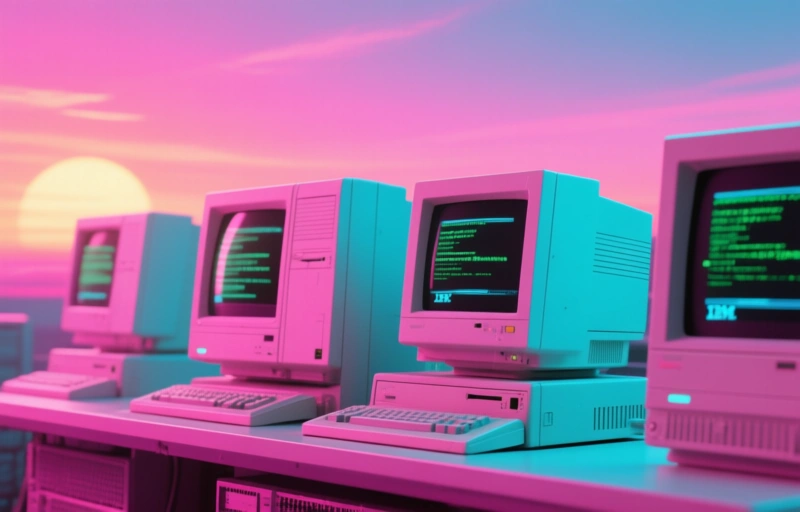
Then came the 1980s. IBM launched its Personal Computer (PC) in 1981, and it was a game-changer. It wasn't the first PC, but it legitimized the market. The problem? IBM outsourced the operating system to a small company called Microsoft and the processor to Intel. That decision, while brilliant in the short term, eventually made the PC market a commodity. Competitors could clone the IBM PC, and they did. By the early 1990s, IBM was bleeding money, losing billions of dollars a year. It was a classic case of a giant stumbling.
### The Reinvention: Services and Software
Here is where IBM's story gets really interesting. In 1993, the company brought in a new CEO, Lou Gerstner, who wasn't even from the tech world. He made a bold call: instead of trying to beat everyone at hardware, IBM would focus on services and software. They would help other companies manage their IT systems. This pivot saved the company. It transformed IBM from a hardware maker into a solutions provider, a shift that made them profitable again and set the stage for their modern focus.
### What IBM Looks Like Today
Today, IBM is all about the big, complex stuff. They're a leader in:
- **Cloud Computing:** Helping businesses move their data and apps to the cloud.
- **Artificial Intelligence (AI):** Their Watson platform is famous for its ability to analyze massive amounts of data.
- **Quantum Computing:** They're building some of the most advanced quantum computers in the world, which could solve problems that are impossible for regular computers.
- **Cybersecurity:** Protecting the digital infrastructure of governments and large corporations.
They also still make mainframes, but they're a far cry from the old punch-card machines. Today's mainframes are powerful, secure systems that handle billions of transactions a day for banks, airlines, and retailers.
### A Legacy of Innovation
So, what's the takeaway? IBM's story is a masterclass in adaptation. They went from making scales and time clocks to building the machines that put a man on the moon. They nearly went under when the market shifted, then reinvented themselves to lead again. It's a reminder that even the biggest companies can't rest on their laurels. Staying relevant means being willing to change, even when you're the one on top.