Mini PCs: The Surprisingly Exciting Computers You Need
Sofía García ·
Listen to this article~4 min
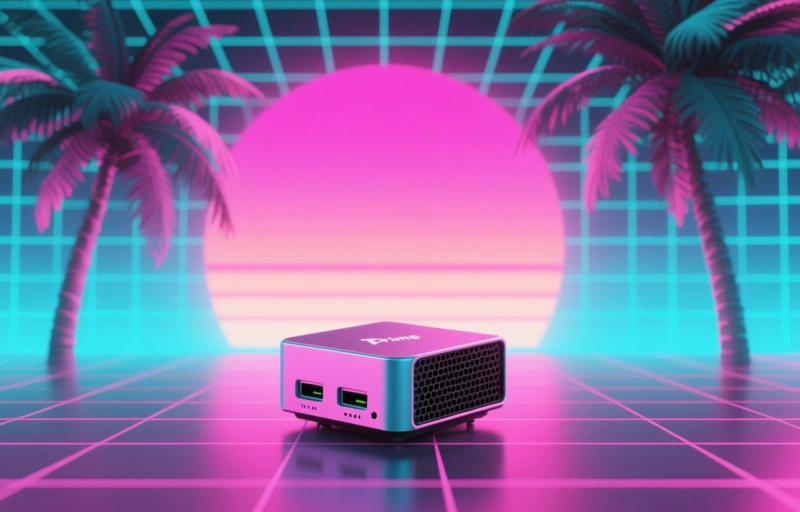
Mini PCs are small, powerful, and affordable. They're perfect for home offices, media centers, and light gaming. Discover why these tiny computers are a big deal.
Let's be honest: when you hear "mini PC," you probably picture a boring little box. But here's the thing—these tiny computers are actually some of the most exciting tech you can buy. They're powerful, affordable, and perfect for everything from home offices to gaming rigs. And they're not just for tech geeks. Everyone from students to professionals is starting to take notice.
### Why Mini PCs Are a Big Deal
Think of a mini PC as a desktop that's been shrunk down to the size of a small book. Inside, you'll find real processors, real RAM, and real storage. That means they can handle everyday tasks—browsing the web, editing documents, streaming video—without breaking a sweat. And the best part? They cost a fraction of what a traditional desktop or laptop does.
- **Space-saving:** They fit on a desk, behind a monitor, or even in a bag.
- **Energy-efficient:** They use way less power than a full-sized tower.
- **Quiet operation:** No loud fans or noisy hard drives.
- **Upgradable:** Many models let you swap out RAM or storage.
### What Can You Do With a Mini PC?
It's easy to underestimate these machines. But they're incredibly versatile. Here are a few real-world uses:
- **Home office:** Run Microsoft Office, Zoom, and Slack without lag.
- **Media center:** Connect it to your TV and stream Netflix or Plex.
- **Light gaming:** Play indie games or older titles at decent settings.
- **Server or NAS:** Host a file server or run a home automation hub.
- **Digital signage:** Power kiosks or displays in retail spaces.
> "Mini PCs prove that you don't need a giant tower to get real work done. They're the perfect balance of power, size, and price."
### Who Should Buy One?
Honestly, almost anyone. But they're especially great for:
- **Remote workers** who want a dedicated machine without clutter.
- **Students** on a budget who need a reliable study tool.
- **Parents** setting up a kid's first computer.
- **Businesses** deploying multiple workstations for employees.
You don't need to spend $1,000 or more. Many excellent mini PCs start around $200 to $400. And if you need more power, models with Intel Core i5 or i7 processors are available for $500 to $800. That's a steal compared to a $1,200 laptop.
### The Hidden Advantage: Upgradability
One of the coolest things about mini PCs is that you can often upgrade them. Add more RAM. Swap out the SSD for a larger one. Replace the Wi-Fi card. That means your computer can grow with you. And since they're small, you can take them anywhere—even on a plane if you're traveling light.
### A Few Things to Keep in Mind
No product is perfect. Here are some trade-offs:
- **Limited graphics power:** Most mini PCs use integrated graphics, so they're not for hardcore gaming or 3D rendering.
- **Fewer ports:** You might need a USB hub for multiple peripherals.
- **No built-in display:** You'll need a monitor, keyboard, and mouse.
But for 90% of what people do, these are minor issues. And the savings in space and money more than make up for it.
### The Bottom Line
Mini PCs are quietly revolutionizing how we think about computers. They're not flashy, but they're reliable, affordable, and surprisingly capable. Whether you're setting up a home office, building a media center, or just want a second machine, a mini PC is a smart choice.
So go ahead—give one a try. You might be surprised at how much you love that little box.