ONEXStation Mini PC: Ryzen AI Max+ 395 with 128GB RAM
Sofía García ·
Listen to this article~4 min
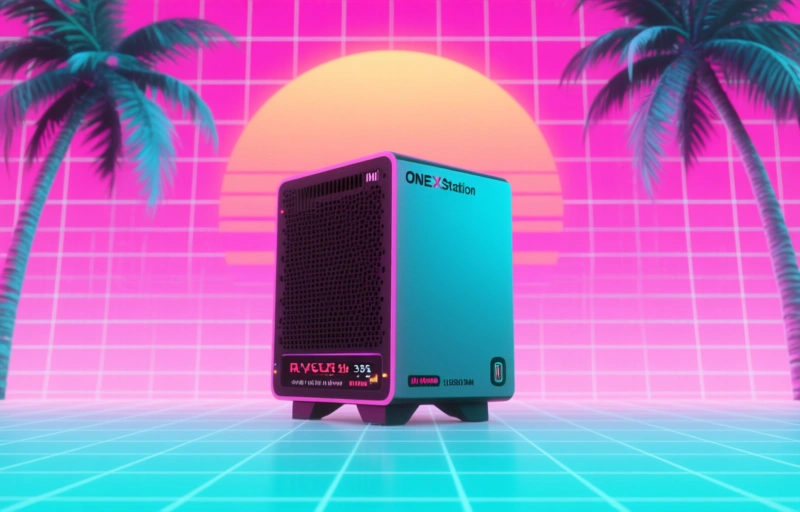
The ONEXStation mini PC packs a serious punch with an AMD Ryzen AI Max+ 395 processor and 128GB of RAM in a compact form factor. Ideal for professionals needing high performance without a bulky desktop tower.
So you're looking at mini PCs, right? Maybe you're tired of that giant tower taking up half your desk. Or maybe you need something powerful but discreet for a creative studio or office setup. Well, let's talk about the ONEXStation. It's one of those new mini PCs that's making some pretty bold claims, packing a Ryzen AI Max+ 395 processor and a whopping 128GB of RAM into a tiny frame. That's not your average compact computer.
It's the kind of spec sheet that makes you do a double-take. We're talking serious power for video editing, 3D rendering, or running multiple virtual machines—all from a device that can literally fit in the palm of your hand. The promise is pretty compelling: desktop-level performance without the desktop footprint.
### What's Under the Hood?
Let's break down what these specs actually mean for you. The Ryzen AI Max+ 395 is AMD's latest and greatest for this form factor. It's designed to handle AI workloads and intensive tasks efficiently. Pair that with 128GB of DDR5 RAM, and you've got a machine that won't blink at having dozens of browser tabs open while you're editing a 4K video and compiling code in the background. It's overkill for just checking email, but for professionals, that headroom is everything.
Then there's the RBG lighting. Okay, they probably mean RGB—Red, Green, Blue—the customizable lighting that's become a staple in gaming and enthusiast builds. It's a fun aesthetic touch that lets you personalize the look of your workspace. Not essential for function, but it shows they're thinking about the user experience beyond just raw specs.

### Who Is This Mini PC Really For?
This isn't a casual purchase. With components like these, the price tag is going to be significant. We're likely looking at well over $1,000, possibly pushing toward $2,000 or more depending on storage and other configurations. So who's the target audience?
- **Content Creators:** Video editors, graphic designers, and music producers who need a powerful, quiet machine that doesn't dominate a small studio.
- **Developers & Engineers:** Professionals who run local servers, virtual machines, or compile large codebases and need massive RAM.
- **Business Professionals:** For those in finance, data analysis, or architecture where software demands serious computing power in a tidy package.
- **High-End Home Users:** Think home theater PC (HTPC) enthusiasts or gamers who want a sleek, powerful living room setup.
The beauty of a mini PC is its versatility. You can mount it behind a monitor with a VESA bracket, tuck it into an entertainment center, or simply let it sit discreetly on your desk. It's about reclaiming space without compromising on capability.
### The Big Picture on Mini PCs
We're seeing a real shift. Mini PCs aren't just underpowered netbooks anymore. They're becoming legitimate alternatives to traditional desktops for a wide range of users. The ONEXStation, with its extreme specs, is at the forefront of that trend. It proves you don't need a giant case full of fans to have a workstation-class machine.
Of course, there are always trade-offs. Upgradability can be limited compared to a full-sized tower. Thermals are a constant challenge—fitting that much power into a small space means cooling has to be exceptionally well-engineered. It's something to consider if you plan on pushing the system hard for hours on end.
As one industry observer recently noted, *'The mini PC revolution isn't about making computers smaller; it's about making powerful computing more accessible and integrated into our lives.'* That feels right. It's about fitting the tool to our modern environments, not the other way around.
So, is the ONEXStation for everyone? Absolutely not. But for the right user—someone who needs maximum power in minimum space—it could be a game-changer. It represents a fascinating point in the evolution of personal computing, where size is no longer the primary constraint on performance. The future of your desk might just be a lot less cluttered.