Silicon Valley: Inside America's Tech Hub
Sofía García ·
Listen to this article~4 min
Discover what makes Silicon Valley the global center of innovation. From its location in California to its culture of risk-taking, learn why this 30-mile stretch shapes the tech world.
Silicon Valley is more than just a place on a map. It's the beating heart of the tech world, a region in Northern California that has given us everything from the microchip to the smartphone. But what makes this spot so special?
Let's pull back the curtain on the area often called the global center of innovation. We'll look at where it is, why it matters, and what it's like to be part of this ecosystem.
### Where Exactly Is Silicon Valley?
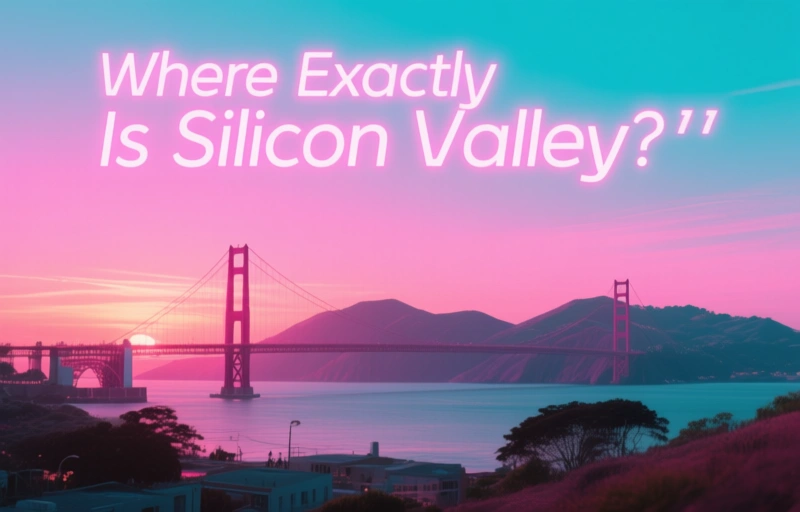
Most people picture San Francisco when they think of tech, but the real action is about 30 to 40 miles south of the city. It stretches from Palo Alto down through Mountain View, Sunnyvale, and into San Jose. The whole area covers roughly 1,850 square miles.
Here's the thing: it's not an official city. It's a nickname for the Santa Clara Valley, named after the silicon used in computer chips. You won't find a sign that says "Welcome to Silicon Valley," but you'll know you're there when you see the sprawling campuses of companies like Apple, Google, and Meta.
The weather is a huge perk. With average highs around 70 to 80 degrees Fahrenheit and over 250 sunny days a year, it's pretty hard to beat. That mild climate helps attract top talent from all over the world.
### Why Is It So Dominant?
It didn't happen by accident. A few key ingredients came together:
- **Stanford University**: This school is the engine. Its graduates and professors have founded thousands of companies. The culture of research and entrepreneurship is baked into the campus.
- **Venture Capital**: The money flows here like nowhere else. Sand Hill Road in Menlo Park is the epicenter of venture capital. If you have a solid idea, you can find funding within a 10-mile radius.
- **Talent Pool**: People move here from every continent. You'll find engineers, designers, and marketers who live and breathe technology. It creates a density of expertise that's hard to replicate.
- **Risk Tolerance**: Failure isn't a stigma here. It's often seen as a learning experience. That willingness to try and fail has led to some of the biggest breakthroughs.

### The Culture and Cost of Living
Let's be real: living here isn't cheap. The median home price in many parts of Silicon Valley is well over $1.5 million. Renting a one-bedroom apartment can easily cost you $2,500 to $3,500 a month. Traffic on Highway 101 can be brutal, with commutes stretching over an hour each way.
But the culture is what keeps people coming. There's a sense of urgency and possibility. You'll hear conversations about AI, biotech, and clean energy at coffee shops. The work ethic is intense, but so are the rewards. Many companies offer free meals, gyms, and even laundry services to keep employees on campus.
### A Quick Look at the History
The name "Silicon Valley" was first used in a 1971 article by journalist Don Hoefler. But the roots go back much further. In the 1950s, William Shockley, one of the inventors of the transistor, set up shop here. His employees left to form Fairchild Semiconductor, which then spawned dozens of other companies.
This "Fairchild family tree" is the foundation of the modern tech industry. From those early chip makers, we got Intel, AMD, and eventually the giants we know today. It's a story of constant evolution.
### The Big Picture
Silicon Valley isn't perfect. It faces challenges with housing affordability, income inequality, and burnout. But it remains the world's most powerful engine for technological progress. Whether you're a startup founder or a curious observer, this 30-mile stretch of California continues to shape how we live, work, and connect.
It's a place where the future is built, one line of code at a time.