Why a Used Mini PC Beats a Raspberry Pi for Most Projects
James Moore ·
Listen to this article~4 min
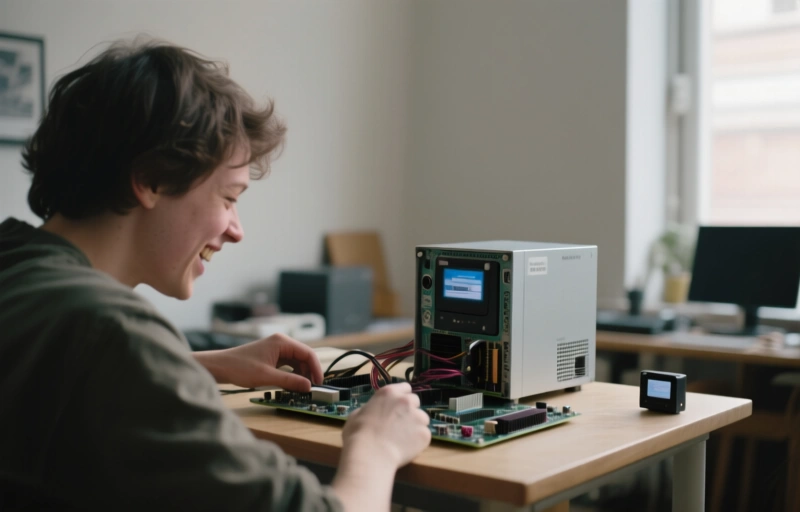
Forget the hype. A used mini PC often offers more power, better compatibility, and lower cost than a Raspberry Pi for common projects like media servers or light desktops. It's the practical choice.
Let's be honest. When you think of a small, affordable computer for a project, the Raspberry Pi probably pops into your head first. It's the famous little board that could. But I want you to consider something else. Something you might have overlooked sitting on a shelf or in a second-hand store.
A cheap, used mini PC.
I know, it sounds less exciting than the latest Pi model. But hear me out. For a huge number of projects, that old office mini PC is actually the smarter, more powerful, and often cheaper choice. It's like choosing a reliable used car over a brand-new scooter for a long commute.
### The Hidden Power of Old Office Hardware
What are we talking about here? I'm referring to those compact desktops from brands like Dell, HP, and Lenovo. The ones businesses cycle out every few years. You can find them for a song on auction sites, local marketplaces, or even in your company's IT closet.
They're not glamorous. But under the hood, they often pack specs that a Raspberry Pi can't touch.
- A full x86 processor, like an Intel Core i3 or i5.
- 4GB to 8GB of RAM, sometimes upgradeable.
- A proper SSD or hard drive.
- Multiple USB ports, display outputs, and built-in Wi-Fi.
- A standard power supply that just works.
You're getting a complete, tested system. No hunting for a case, a power supply, or a compatible SD card. It's plug-and-play from minute one.
### Where the Mini PC Really Shines
Think about what you're trying to build. Is it a home media server for Plex? A dedicated machine for a retro gaming emulator? A always-on download box or a lightweight desktop for a family member?
For these tasks, the mini PC is a powerhouse. The x86 architecture means you can run a full version of Windows or Linux without any quirky driver issues. You get native performance for video playback and emulation. Storage is easy and cheap to upgrade with standard SATA drives.
One of my favorite quotes from a colleague sums it up perfectly: "We got so focused on the tool's novelty that we forgot to ask if it was the right tool for the job."
The Raspberry Pi is a brilliant tool for learning, for embedded projects where size and GPIO pins are critical. But for a general-purpose small computer? The used mini PC often wins.
### The Practical Cost Comparison
Let's break down the real cost. A new Raspberry Pi 5, with a decent power supply, a case, a cooling solution, and a fast microSD card, can easily push over $100. And you still have a device with limited RAM and processing headroom for heavier tasks.
For that same $100, you can frequently find a used mini PC with a more capable processor, more RAM, and built-in storage. It's a more complete solution out of the gate. The value is just undeniable for most common home and hobbyist projects.
### Making the Right Choice for Your Needs
So, should you never buy a Raspberry Pi? Of course not. If your project involves sensors, robotics, or custom hardware interfacing, those GPIO pins are irreplaceable. The Pi is a champion in its own arena.
But if your needs are more about software, media, or general computing in a small box, take a look at the used market first. That unassuming mini PC might be the workhorse you didn't know you were looking for. It's about choosing the practical, powerful solution over the trendy one. And sometimes, the best tech isn't the newest—it's the one that gets the job done without any fuss.