Topton D12 Ultra: Small Mini PC, Massive Workload Power
James Moore ·
Listen to this article~4 min
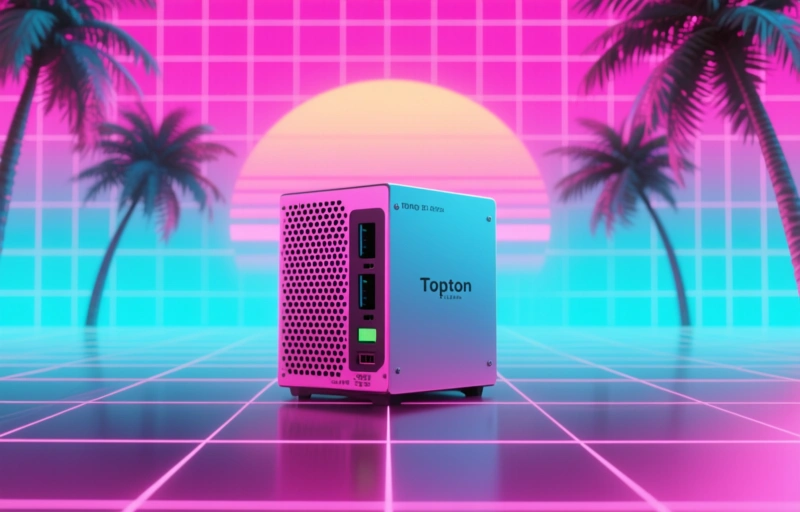
The Topton D12 Ultra mini PC shatters the myth that power requires size. This compact machine delivers serious performance for professional workloads, from development to data analysis, proving small form factors are now truly capable.
You know, there's this persistent idea floating around that to get real computing power, you need a big, bulky tower. It's like we're conditioned to think size equals capability. But let's be honest, who really wants a machine that sounds like a jet engine and heats up the whole room? That's why the conversation around the Topton D12 Ultra is so fascinating. It's challenging that very notion, proving that a compact mini PC can absolutely shoulder heavy-duty tasks.
It's a game-changer for professionals who need performance without the footprint. Imagine clearing up your entire desk, getting rid of that cable jungle, and still having all the power you need for complex simulations, data analysis, or multi-threaded applications. That's the promise here, and it's not just marketing fluff.
### What Makes This Mini PC So Capable?
The magic isn't in shrinking a standard PC. It's about smarter, more efficient engineering. The D12 Ultra leverages the latest generation of low-power, high-performance processors. These chips are designed from the ground up to deliver maximum output with minimal thermal and spatial requirements. They pair this with fast, high-bandwidth memory and NVMe storage that leaves old-school SATA drives in the dust.
We're talking about a system that can handle virtualization, software development environments, and even moderate video editing—all from a chassis that can literally fit in the palm of your hand. The thermal management is key here. Advanced cooling solutions, often using heat pipes and silent fans, ensure sustained performance without throttling.
### Real-World Applications for Professionals
So, where does a machine like this fit in a professional setting? The use cases are broader than you might think.
- **Digital Workspace Consolidation:** Replace multiple older machines with a single, powerful mini PC for each employee, simplifying IT management.
- **Edge Computing Nodes:** Deploy them in retail, manufacturing, or field offices where space is limited but local processing is critical.
- **Development and Testing:** Perfect for spinning up clean environments for coding, testing, and QA without dedicating a full-sized rig.
- **Media Server Hub:** A quiet, powerful center for hosting project files, acting as a local network-attached storage (NAS), or running background rendering tasks.
The flexibility is incredible. You can mount it behind a monitor, tuck it into a server rack with a bracket, or just let it sit discreetly on a shelf. It's about reclaiming space and reducing clutter, which, let's face it, can do wonders for focus and productivity.
### The Bigger Picture for Mini PCs
This isn't just about one model. The Topton D12 Ultra is a signpost for where the entire category is headed. We're moving past the era where mini PCs were just for basic web browsing or media playback. The technology has matured. As one industry observer recently noted, *'The convergence of efficient silicon and sophisticated cooling is turning size from a limitation into a design choice.'*
That's a powerful shift. It means professionals no longer have to compromise. You don't have to choose between a clean, minimalist workspace and a machine that can get the job done. You can have both. The barrier has always been thermal performance and component density, and those barriers are falling fast.
Of course, it's not a solution for every single high-end workload—extreme gaming or intensive 3D rendering might still demand specialized, larger hardware. But for a vast swath of professional computing tasks, the capability is now undeniably there, packaged in a form factor that finally makes sense for the modern, streamlined office.
It makes you wonder what we'll be able to fit into these small boxes a couple of years from now. The trajectory is clear: more power, less space, and finally, freedom from the big beige box under the desk.