Why I'm Ditching Full-Size Desktops for Mini PCs
James Moore ·
Listen to this article~5 min
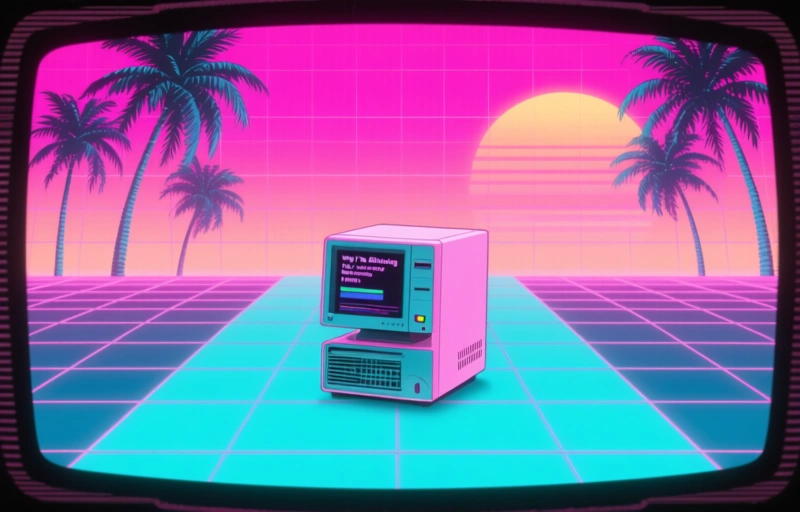
After decades with bulky desktop towers, I switched to a Mini PC. The space savings, silent operation, and energy efficiency have completely changed my computing experience. Here's why it might be time for you to make the switch too.
Let's be honest, the traditional desktop tower has been a fixture in offices and homes for decades. It's what we know, what we're comfortable with. But recently, I made a switch that's changed my entire perspective on personal computing. I moved from a bulky, noisy full-size desktop to a sleek, silent Mini PC. And I'm not going back.
This isn't just about saving a bit of desk space, though that's a nice bonus. It's about a fundamental shift in how we think about computing power and efficiency. For years, I believed you needed a big case to house serious performance. I was wrong.
### The Space-Saving Revolution
The first thing you'll notice is the physical footprint. Or rather, the lack of one. My Mini PC is about the size of a hardcover book. It sits discreetly behind my monitor, mounted with a simple VESA bracket. Gone is the tower that hogged floor space and collected dust bunnies like they were going out of style.
This compact design isn't just about aesthetics. It creates a cleaner, more organized workspace. You can tuck it away, mount it under a desk, or even attach it to the back of a monitor. The flexibility is genuinely liberating.
### Performance That Punches Above Its Weight
Here's where most people get skeptical. "Sure, it's small," they say, "but can it actually handle real work?" I had the same doubts. But modern Mini PCs are powered by efficient processors that rival their desktop counterparts. We're talking about capable chips from Intel and AMD that handle everyday tasks with ease:
- Office applications and web browsing run flawlessly
- Multiple monitor setups are fully supported
- Light photo editing and content creation are absolutely possible
- Many models even handle 4K video playback without breaking a sweat
It's not for hardcore gaming or intensive video rendering, but for probably 80% of users, it's more than enough power.
### The Silent Operator
This might be my favorite benefit. My old desktop sounded like a jet engine preparing for takeoff whenever I opened more than three browser tabs. The Mini PC? It's completely silent. No fans whirring, no constant hum in the background. Just peaceful, focused work.
The lack of noise isn't just pleasant—it reduces cognitive load. You don't realize how much constant background noise affects your concentration until it's gone.
### Energy Efficiency Matters
Let's talk about the electricity bill. A typical desktop might draw 200-400 watts under load. My Mini PC sips power at around 15-45 watts. That's a massive difference that adds up over months and years. In an era where we're all thinking about energy consumption, this is a meaningful way to reduce your footprint without sacrificing capability.
As one colleague put it when he saw my setup, "It's like discovering you've been driving a semi-truck to the grocery store this whole time."
### The Practical Considerations
Now, Mini PCs aren't perfect for everyone. You do make some trade-offs:
- Limited upgradeability compared to traditional towers
- Usually fewer ports, though USB hubs solve this easily
- Graphics performance is integrated, not dedicated
But here's the thing—most people don't upgrade their computers piece by piece anymore. They buy a complete system and replace it years later. And for connectivity, a good USB-C hub gives you all the ports you'll ever need.
### Making the Switch
If you're considering making the move, start by honestly assessing your needs. What do you actually use your computer for? For browsing, streaming, office work, and even some light creative tasks, a Mini PC is more than sufficient.
Look for models with at least 8GB of RAM (16GB is better for future-proofing) and solid-state storage. The beauty is that many companies now offer excellent Mini PCs at various price points, from budget-friendly options to premium models.
I've been using my Mini PC for several months now, and I haven't missed my old desktop once. The space it freed up, the silence it brought, and the energy it saves have all contributed to a better computing experience. Sometimes, smaller really is better—and in the case of Mini PCs, it's smarter too.