Zotac's Edge AI Mini PC: Up to 64GB RAM for Compact Power
James Moore ·
Listen to this article~4 min
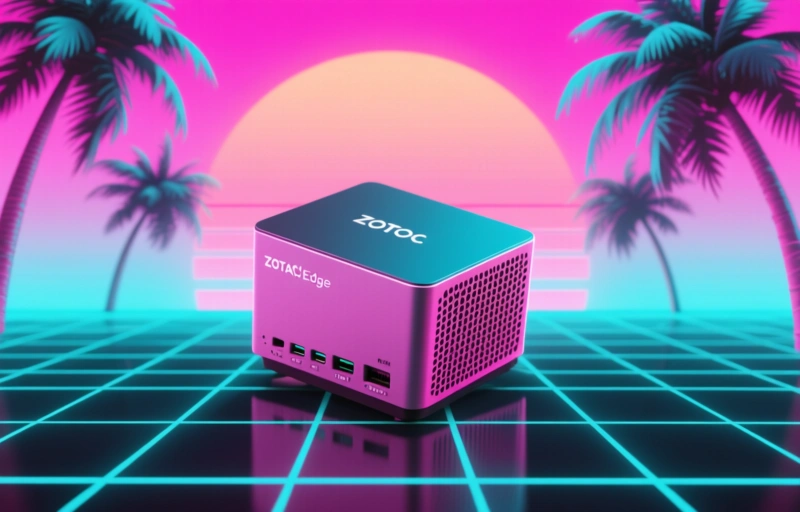
Zotac's new Edge AI mini PC supports up to 64GB RAM, signaling a major leap in compact computing power for professionals managing Prime systems and legacy mini-computer environments.
So, Zotac just dropped some news that's got the compact computing world buzzing. They've announced their new Edge AI mini PC, and the headline feature is pretty eye-catching: support for up to 64GB of RAM. That's not your average spec for a machine this size. It makes you stop and think about what's possible in such a small footprint these days.
For professionals working with Prime Computer systems or managing legacy mini-computer products, this kind of announcement isn't just a product launch. It's a signal. It shows where the industry is pushing the boundaries of compact, powerful computing. The 'Edge AI' part of the name tells you exactly where Zotac is aiming this thing—right at the growing demand for intelligent processing at the network's edge, close to where data is actually generated.
### What This Means for Compact Computing
Let's break it down. A mini PC with 64GB of RAM isn't just a small office computer anymore. That's a serious amount of memory. We're talking about a machine that can handle heavy-duty tasks you'd normally reserve for a full-sized tower. Think complex data analysis, running multiple virtual machines for testing legacy software environments, or powering AI inference models locally without needing to send data back to a cloud server.
For architects and specialists, this shift is crucial. It means you can deploy significant computational power in space-constrained environments—a factory floor, a retail kiosk, a medical cart, or even integrated within larger legacy systems for a modern upgrade. The physical size becomes almost an afterthought when the performance profile starts to rival bigger machines.
### The Professional Use Case Angle
Where does this fit in a professional's toolkit? Imagine you're responsible for a network of point-of-sale systems, digital signage, or industrial control panels. Traditionally, upgrading might mean bulky hardware swaps or complex server-room expansions. A device like this changes that calculus.
You could consolidate functions. One powerful Edge AI mini PC might replace several older, single-purpose units. It could run the main application, handle local data processing for an AI camera system, and manage network communications—all from a box that fits in the palm of your hand. The efficiency gains, both in terms of physical space and management overhead, are substantial.
Here’s a quick look at what this kind of power enables:
- Local AI model execution for real-time analytics
- Dense virtualization for software development and testing
- High-performance computing nodes in clustered setups
- Media processing and streaming without external servers

### The Bigger Picture for Legacy Systems
There's another layer here for those of us who work with older systems. Legacy environments often face a compatibility crunch. New software demands new hardware, but the physical infrastructure and integration points are fixed. A high-RAM mini PC acts as a perfect bridge.
You can use it as a modern application server that interfaces with older backend systems. Or, it can be the brain for a new interface layer on top of a classic mini-computer database. The compact form factor means it can be installed almost anywhere—right next to the legacy hardware it's augmenting.
As one systems architect I know likes to say, *'The best upgrade is the one the users never see, but always feel.'* A powerful, silent mini PC tucked away, making everything run smoother, is exactly that.
The announcement from Zotac is more than just a spec sheet. It's a confirmation of a trend we've all been watching: the miniaturization of serious computing power. For professionals making decisions about Prime Computer products, mini-computer deployments, or modernizing computer product lines, it's a clear data point. The gap between 'small' and 'capable' is closing fast, and that opens up a whole new set of possibilities for system design.